
Introduction
Spring has arrived, and with it the growth spurt. Hedges that barely moved over winter are about to push out a season's worth of new shoots, and a trim at the right moment makes the difference between a hedge that stays tidy all summer and one that gets away on you.
This guide covers when to make your first cut, how to get a straight, healthy finish, and which kind of trimmer suits your hedges.
When to trim in spring
Wait for the first flush
The best time for the first trim of the season is just after the first flush of new growth has started to firm up. Trim too early and you will be doing it again in a few weeks; leave it too long and you will be cutting back into thick, woody growth.
For most common hedging plants that means mid to late spring, followed by a lighter tidy-up in summer.
Check for nesting birds
Spring is nesting season. Before you start, take a minute to look through the hedge for active nests, and if you find one, leave that section until the chicks have fledged.
Pick a dry, overcast day
Trimming in bright midday sun can scorch freshly cut leaves, and wet foliage clogs blades and makes footing slippery. A dry, cloudy morning is ideal.
How to get a good finish
Shape it wider at the base
Trim so the hedge is slightly narrower at the top than at the bottom. That gentle taper lets light reach the lower branches, which keeps the base thick and green instead of bare and leggy.
Work in smooth, sweeping passes
- Sides first: work from the bottom up, in long arcs, keeping the blade parallel to the hedge
- Top last: use a string line between two stakes if you want a truly level top
- Let the tool do the work: a sharp blade cuts cleanly without forcing it
Take a little, often
Regular light trims give a denser, healthier hedge than one hard cut a year. Aim to remove only the new growth, not back into bare wood, unless you are deliberately renovating an overgrown hedge.
Choosing the right trimmer
Compact battery hedge trimmers
For low and medium hedges around the section, a battery hedge trimmer is light, quiet and starts at the push of a button. No fuel to mix and no cord to drag, and the battery often fits the rest of your STIHL battery tools too.
Long-reach hedge trimmers
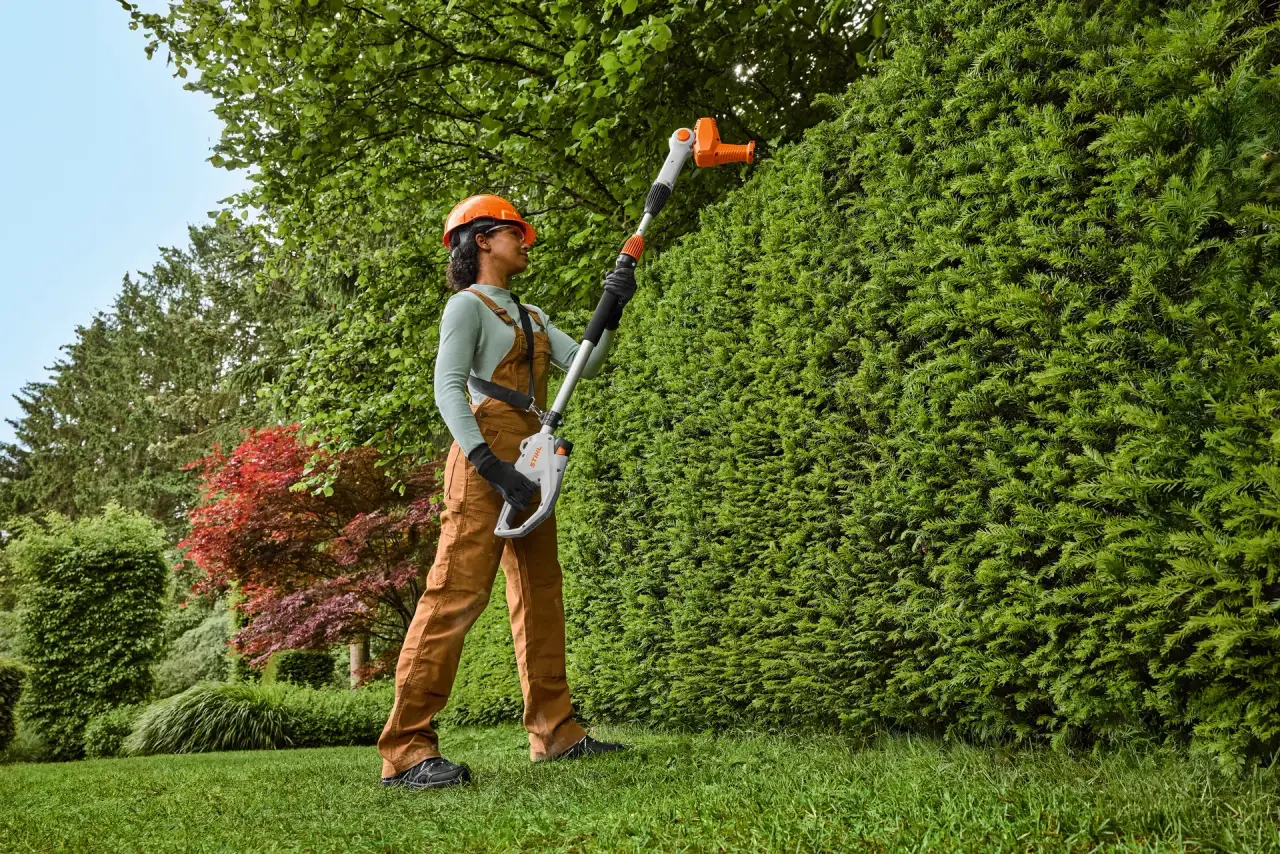
Tall hedges are where most accidents happen, usually because someone is balancing on a ladder with a trimmer at arm's length. A long-reach hedge trimmer, with an adjustable cutting head on an extended shaft, lets you trim the top of a tall hedge from the ground. It is safer, and the finish is usually better too.
Petrol hedge trimmers
For long runs of shelter belt or thick, established hedging on a lifestyle block, a petrol hedge trimmer gives you the power and run time to get through it in one go.
Look after your blades
Hedge trimmer blades take a beating from sap and small branches. After each session:
- Brush off clippings and wipe the blades clean
- Apply a resin solvent or blade lubricant to stop sap building up
- Check for chipped or blunt teeth; blunt blades tear stems instead of cutting them
If the blades are past a quick clean, bring the trimmer in. A sharpen and service in spring sets it up for the whole season.
Stay safe
- Wear safety glasses, gloves and hearing protection
- Keep both hands on the trimmer and your footing stable
- Never trim near power lines. Call a professional for anything close to overhead lines
- Switch off and remove the battery before clearing a jam
A hedge that gets a light trim at the right time, with a sharp blade, looks after itself for most of the summer.
Not sure which trimmer suits your hedges? Come and see the team at STIHL SHOP Rotorua. We can show you the range, and get your existing trimmer sharpened and serviced for spring.